
Moth Damage Repair, Rewoven Knot by Knot
Hand-Rewoven by Specialists
Knot Type, Direction & Density Matched
Dye-Matched Yarn
Repair Invisible in the Pile
100% Satisfaction Guarantee
Or We Re-Work For Free
15,000+ Rugs Restored
Across Alabama
Types of Moth Damage We Repair
Every Form of Moth Damage, Assessed & Restored
Isolated Bald Patches
Thinning & Low-Pile Areas
Pattern Interruption & Loss
Edge & Border Damage
Antique & Heirloom Rug Damage
Extensive Multi-Area Damage
 Runner Rugs
Antique Rugs
Synthetic Rugs
Viscose & Nylon
Bedroom Rugs
Office Rugs
Persian & Oriental Rugs
Silk Rugs
Wool Rugs
Area Rugs
Runner Rugs
Antique Rugs
Synthetic Rugs
Viscose & Nylon
Bedroom Rugs
Office Rugs
Persian & Oriental Rugs
Silk Rugs
Wool Rugs
Runner Rugs
Antique Rugs
Synthetic Rugs
Viscose & Nylon
Bedroom Rugs
Office Rugs
Persian & Oriental Rugs
Silk Rugs
Wool Rugs
Area Rugs
Runner Rugs
Antique Rugs
Synthetic Rugs
Viscose & Nylon
Bedroom Rugs
Office Rugs
Persian & Oriental Rugs
Silk Rugs
Wool Rugs
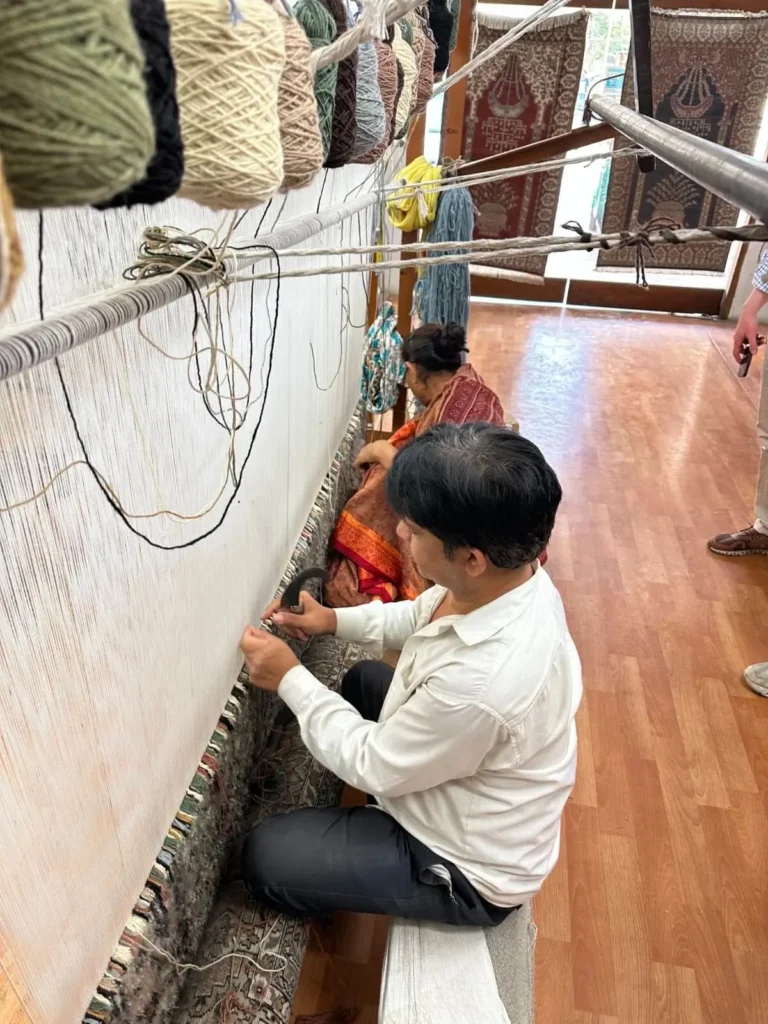
Repair & Sanitation — Both Are Required
A Rewoven Rug with Active Larvae Is a Rug That Will Be Damaged Again
Every Week of Active Infestation Is More Fiber Lost — and a Harder Repair
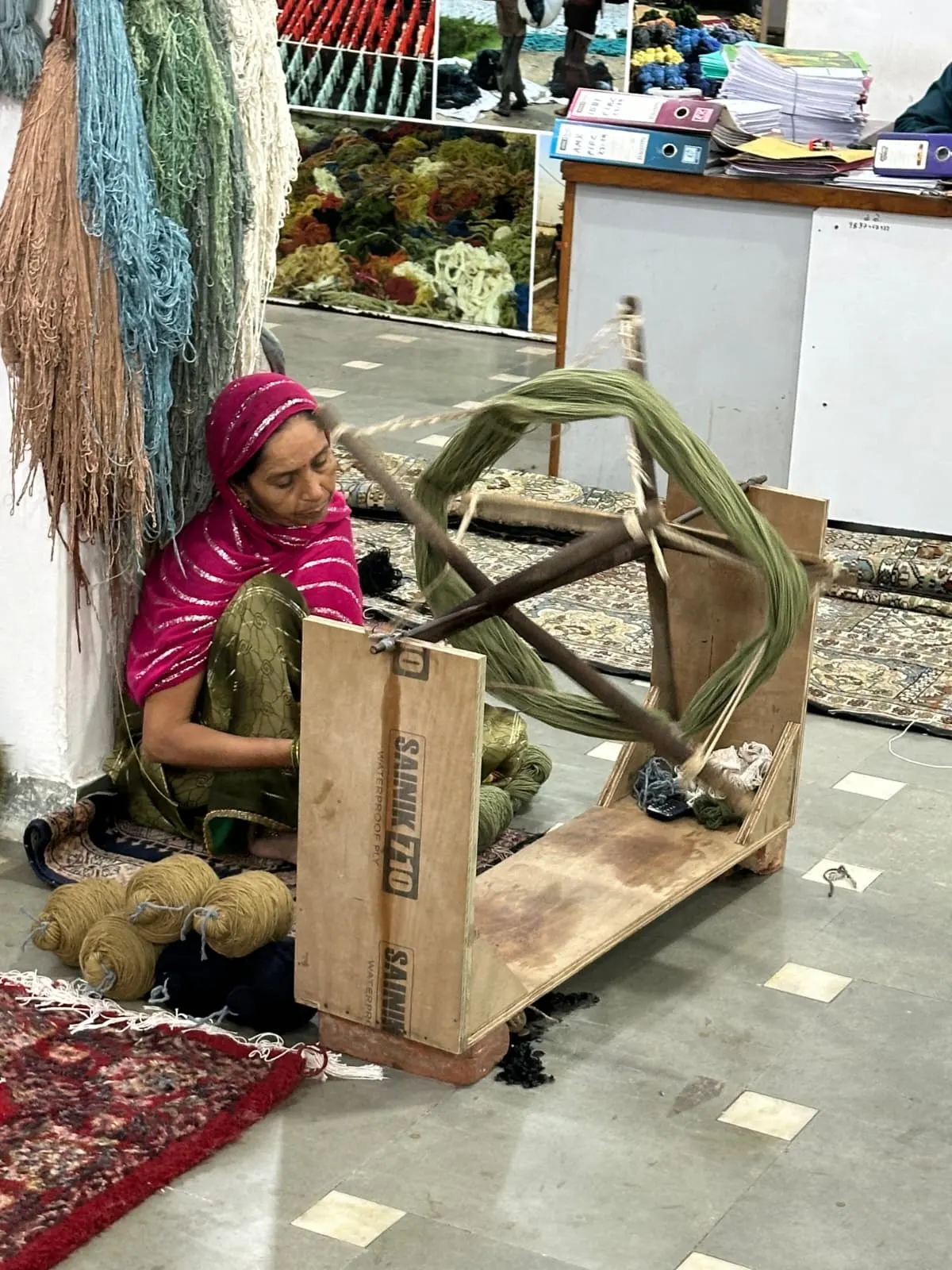
Why Rug Owners Choose Essy Rugs for Moth Damage Repair
Sanitation First. Reweaving Second. No Exceptions.
Full Sanitation Before Every Repair — Always
We do not reweavé over an active infestation. Every rug accepted for moth damage repair passes through our complete sanitation protocol first — UV inspection, targeted treatment, organic hand-wash — so the repair goes into a clean rug with no surviving larvae, eggs, or casings.
Construction-Matched Reweaving — Knot, Direction & Density
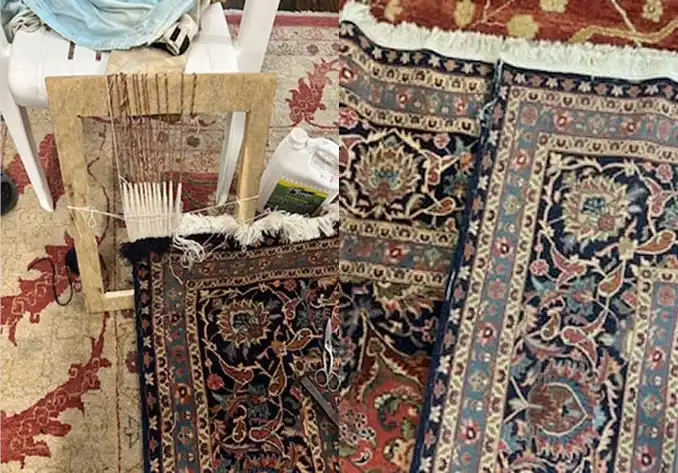
We identify the rug's specific knot type, pile direction, and knot density in the area surrounding each repair before tying a single new knot. These variables differ between rugs and even between areas of the same rug. Getting them wrong produces a repair that is visible and structurally mismatched. Getting them right makes the repair disappear.
Dye-Matched to the Aged Pile — Not the Original Colour
On older rugs, the pile has mellowed and shifted over decades of exposure. We match the repair yarn to the current colour of the surrounding pile — not to what the colours were when the rug was made — so the new pile integrates with the existing rug as it looks today, not as it looked a hundred years ago.
Handcrafted Moth Damage Restoration
All reweaving is completed by hand at our Montgomery workshop. Repair timelines vary according to the extent of the damage and are discussed during the initial assessment.
Real Results
Before & After: Moth Damage Rewoven, Pattern Restored
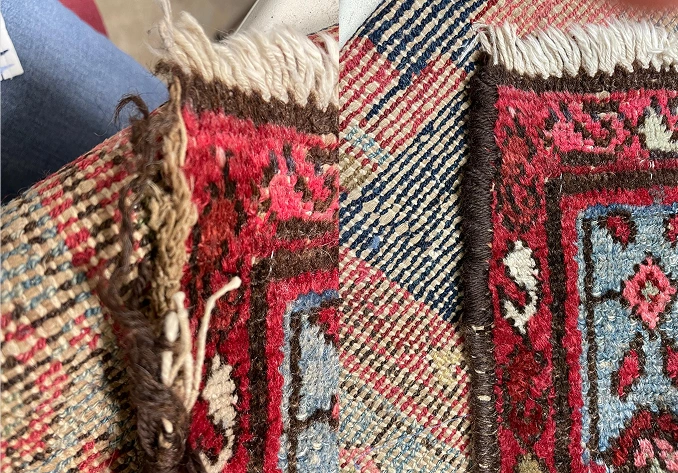
Before
Wool Persian — Multiple Bald Patches in Field
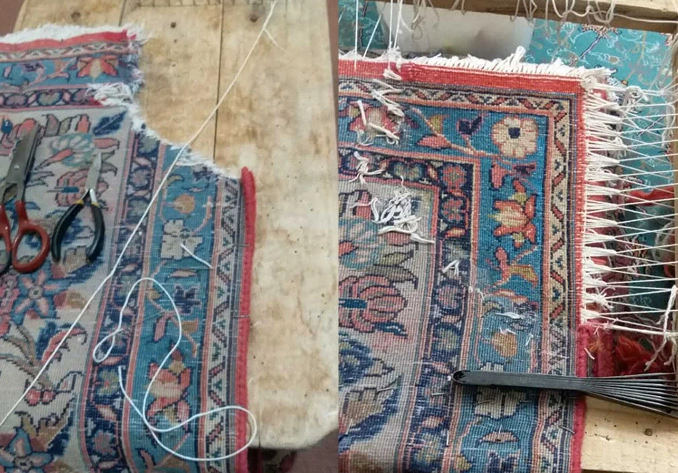
Before
Wool Area Rug — Full Border Section Lost
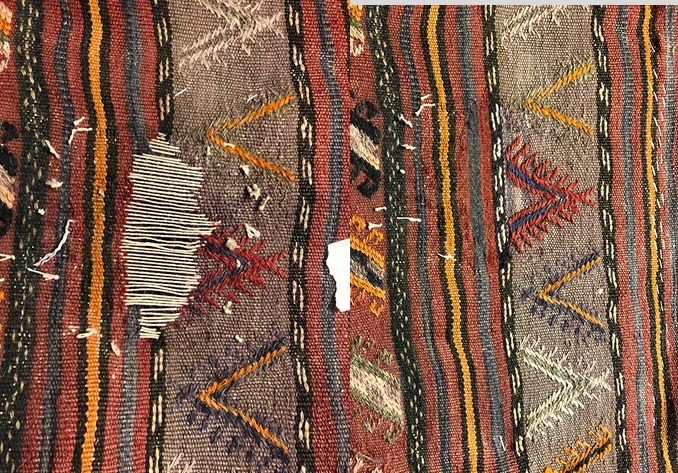
Before
Antique Silk Oriental — Central Medallion Damage
Customers Who Got Their Rugs Back Whole Again
Posted on Google
 koestlm
Trustindex verifies that the original source of the review is Google.
Mr. Essy was so patient with me in finding a rug for my den while also trying to shop and discuss with my children with me. I wanted a rug I would love for decades. He has great knowledge and wants the customer to be happy in the end, not just sale the rug. I feel like I have known him for years. I am confident he can help you decide on a rug too!Posted on Google Charlotte NorthI was blown away by the level of care he brought to cleaning my rug. He cleaned it beautifully, and his knowledge made the whole process easy to trust. He clearly knows his craft. His prices are beyond fair, and he’s one of the kindest people I’ve worked with in a long time. He answered all my rug questions with patience and real expertise. A truly positive experience from start to finish — I wouldn’t go anywhere else.Posted on Google
 pinkcufflynxAMAZING CUSTOMER SERVICE!!!! This is my second time purchasing a rug from Essy and he is the best! The quality of both of the rugs is great, and I'll definitely purchase from him again! He was able to work with my schedule.Posted on Google
 Holley HenleyThe best in the business! Essy went the extra mile to bring back to life a rug that most would have discarded and made it look new again at the most reasonable price.Posted on Google
 Nigel MuchenaBeautiful experiencePosted on Google
 Sanjeev SinhaLiked Essy, the owner, and his dealing with the customer. He is a very good seller who helped in selecting a nice rug. The price was reasonable.Posted on Google
 Tyrone
Trustindex verifies that the original source of the review is Google.
I had a black & white rug that had never been cleaned in 12 years. Essy Rugs not only made it look brand new the price and turnaround time made it elegant! I own residential rental properties. I will be referring all of my tenants to Easy Rugs for services.Posted on Google Hassen FakesTook great care of my mother-in-law’s rugs! Cleaned and repaired impeccably! Value and expertise unparalleledPosted on Google
 Rohit ChaudharyBest rug repairing service in Montgomery.
Common Questions
Moth Damage Repair FAQ
In most cases yes — provided the repair is approached correctly with the right yarn match, knot type, pile direction, and pattern accuracy. The quality of the invisibility depends on the complexity of the pattern in the damaged area, the extent of the damage, and how closely the replacement yarn can be matched to the aged pile. We always provide an honest assessment of the expected visual outcome before any work begins, and we will tell you clearly when a repair will carry some visibility rather than be fully invisible.
Because moth larvae are the cause of the damage. Reweaving new pile over an active infestation simply gives the surviving larvae fresh fiber to consume — the new pile will be damaged within weeks. Full sanitation eliminates all life stages of the infestation before the repair begins, ensuring the new pile goes into a clean rug that the moths cannot immediately re-damage. This is why we include sanitation as a mandatory first stage of every moth damage repair.
Yes — we have specific protocols for silk and antique rugs that balance effective repair with appropriate care for fragile fibers and aged dyes. Antique and silk repairs use hand-dyed yarn matched to the current aged colour of the pile, period-appropriate knotting techniques, and a conservative approach that prioritises structural stability and visual completeness over aggressive intervention. Some of the most technically impressive moth damage repairs we have completed have been on antique silk pieces.
Pattern-interrupted moth damage is the most demanding repair we undertake — it requires the reweaver to accurately map the pattern repeat from the surviving surrounding pile and reproduce it knot by knot within the damaged area. We assess the complexity of the pattern and the clarity of the repeat in the surrounding pile before confirming whether a pattern-accurate repair is achievable and what the expected result will look like.
Repair timelines depend on the extent of the damage, the complexity of the pattern, and the fiber type. Small isolated patches on plain or simple-pattern areas can be completed within 2–3 weeks. Large areas or complex pattern restoration — particularly on antique pieces — may take several months. We provide a clear timeline estimate during the assessment before any work is agreed, and we do not rush reweaving work to meet an artificial deadline.
No — Essy Rugs does not currently offer pickup and delivery. Customers can bring their rug to our facility for a detailed moth damage assessment, sanitation, and repair evaluation. We’ll discuss the recommended treatment, expected timeline, and repair options before any work begins.
Found Moth Damage? Let Us Assess It Honestly.
Get Started Today
Request Your Free Moth Damage Repair Quote
- Sanitation Included Before Every Repair
- Hand-Rewoven — Construction & Pattern Matched
- 100% Satisfaction Guarantee
- Call Direct: +1 (334) 676-3311