
Rug Reweaving & Patching, Made to Disappear
Hand-Rewoven by Specialists
Knot, Direction & Density Matched
Dye-Matched Yarn
Repair Invisible in the Pile
100% Satisfaction Guarantee
Or We Re-Work For Free
Detailed Quality Inspection
Every Repair Checked Before Collection
What We Repair
Every Type of Structural Damage, Rebuilt by Hand
Cuts & Puncture Holes
Burn Damage
Pet Chewing & Tearing
Wear-Through & Bare Patches
Patching for Machine-Made Rugs
Large Area & Multi-Zone Damage
 Runner Rugs
Antique Rugs
Synthetic Rugs
Viscose & Nylon
Bedroom Rugs
Office Rugs
Persian & Oriental Rugs
Silk Rugs
Wool Rugs
Area Rugs
Runner Rugs
Antique Rugs
Synthetic Rugs
Viscose & Nylon
Bedroom Rugs
Office Rugs
Persian & Oriental Rugs
Silk Rugs
Wool Rugs
Runner Rugs
Antique Rugs
Synthetic Rugs
Viscose & Nylon
Bedroom Rugs
Office Rugs
Persian & Oriental Rugs
Silk Rugs
Wool Rugs
Area Rugs
Runner Rugs
Antique Rugs
Synthetic Rugs
Viscose & Nylon
Bedroom Rugs
Office Rugs
Persian & Oriental Rugs
Silk Rugs
Wool Rugs
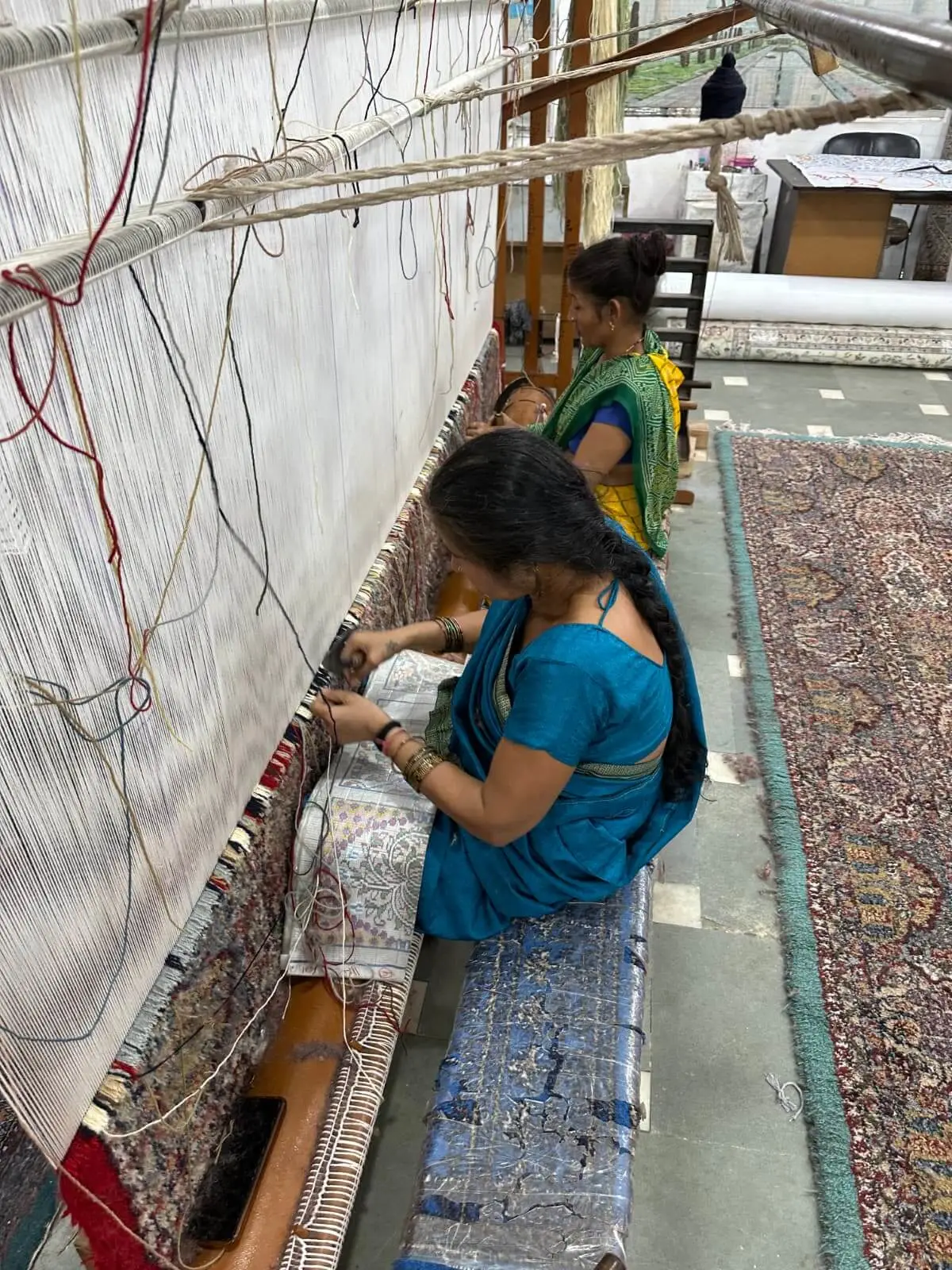
Reweaving vs Patching — Knowing Which Is Right
The Right Technique for the Right Rug. The Wrong One Makes It Worse.
Unrepaired Holes and Tears Grow Larger with Every Step Taken Across Them
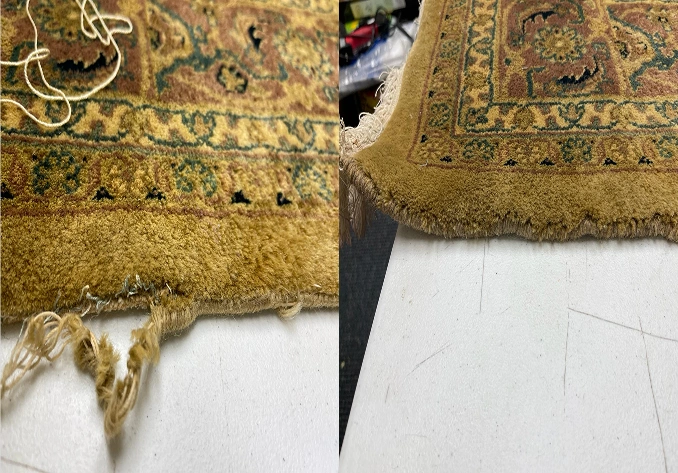
Why Rug Owners Choose Essy Rugs for Reweaving & Patching
We Repair the Structure First. Invisibility Follows from That.
Foundation Assessment Before Any Reweaving Begins
Every hole, tear, and worn-through section is assessed for warp and weft damage before any pile work is started. Reweaving over a broken foundation produces a repair that pulls apart under use. We restore the structural base of every damaged area first — and only then rebuild the pile above it.
Knot Type, Pile Direction & Density — All Matched
We identify the specific knot type, pile direction, and knot density of the rug in the area surrounding the damage before tying a single new knot. A repair that uses the wrong knot, the wrong pile direction, or too few or too many knots per square inch will always be visible. Matching all three is what makes a repaired area disappear.
Dye-Matched to the Existing Pile — Not the Original Colour
We match repair yarn to the current colour of the surrounding pile — accounting for any fading, mellowing, or tonal shift that has occurred over the rug's life. This is particularly important on older rugs where the pile has aged significantly. New yarn matched to the original undimmed colour will always stand out against the aged surrounding pile.
Handcrafted Reweaving & Patching
All reweaving and patching is completed by hand at our Montgomery workshop. Each repair is inspected for quality before the rug is carefully prepared for collection.
Real Results
Before & After: Damage Rewoven, Rugs Made Whole
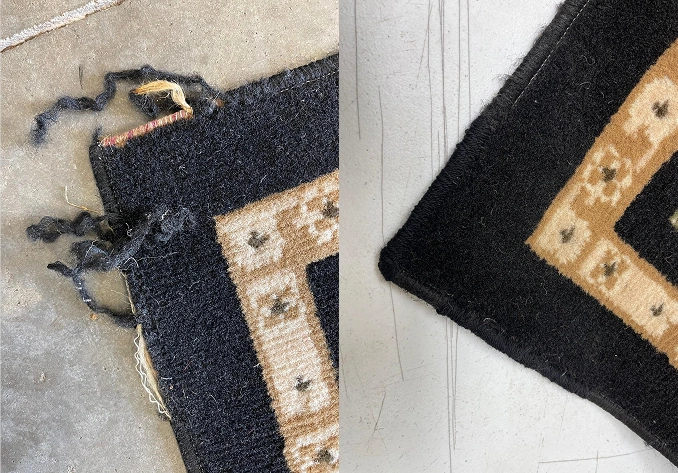
Before
Wool Persian — Large Puncture Hole in Field
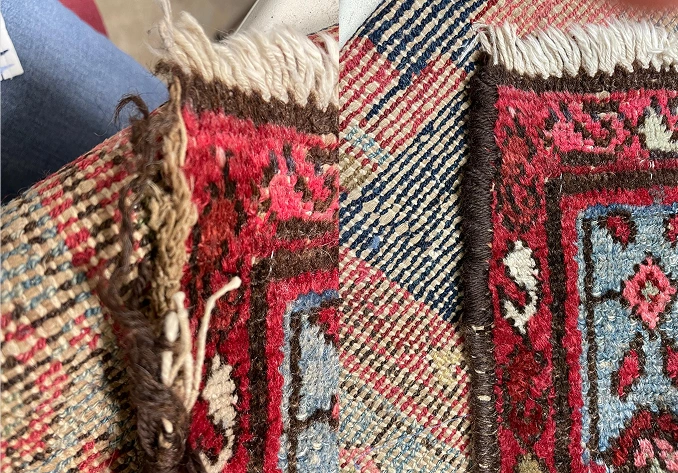
Before
Wool Area Rug — Dog Chewing Along Corner & Edge
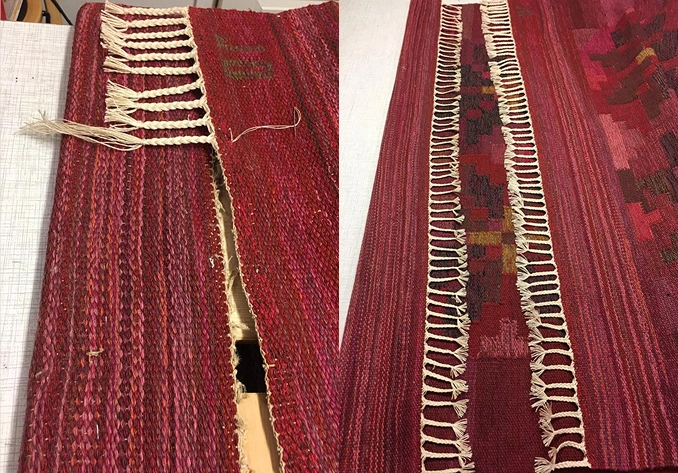
Before
Antique Oriental Rug — Candle Burn in Border
Customers Who Couldn't Find the Repair Afterwards
Posted on Google
 koestlm
Trustindex verifies that the original source of the review is Google.
Mr. Essy was so patient with me in finding a rug for my den while also trying to shop and discuss with my children with me. I wanted a rug I would love for decades. He has great knowledge and wants the customer to be happy in the end, not just sale the rug. I feel like I have known him for years. I am confident he can help you decide on a rug too!Posted on Google Charlotte NorthI was blown away by the level of care he brought to cleaning my rug. He cleaned it beautifully, and his knowledge made the whole process easy to trust. He clearly knows his craft. His prices are beyond fair, and he’s one of the kindest people I’ve worked with in a long time. He answered all my rug questions with patience and real expertise. A truly positive experience from start to finish — I wouldn’t go anywhere else.Posted on Google
 pinkcufflynxAMAZING CUSTOMER SERVICE!!!! This is my second time purchasing a rug from Essy and he is the best! The quality of both of the rugs is great, and I'll definitely purchase from him again! He was able to work with my schedule.Posted on Google
 Holley HenleyThe best in the business! Essy went the extra mile to bring back to life a rug that most would have discarded and made it look new again at the most reasonable price.Posted on Google
 Nigel MuchenaBeautiful experiencePosted on Google
 Sanjeev SinhaLiked Essy, the owner, and his dealing with the customer. He is a very good seller who helped in selecting a nice rug. The price was reasonable.Posted on Google
 Tyrone
Trustindex verifies that the original source of the review is Google.
I had a black & white rug that had never been cleaned in 12 years. Essy Rugs not only made it look brand new the price and turnaround time made it elegant! I own residential rental properties. I will be referring all of my tenants to Easy Rugs for services.Posted on Google Hassen FakesTook great care of my mother-in-law’s rugs! Cleaned and repaired impeccably! Value and expertise unparalleledPosted on Google
 Rohit ChaudharyBest rug repairing service in Montgomery.
Common Questions
Reweaving & Patching FAQ
Reweaving is the process of rebuilding the warp-and-weft foundation and then re-tying pile knots individually into the repaired structure — the correct technique for hand-knotted Oriental and Persian rugs. Patching involves inlaying a piece of matching material into the damaged area and securing it at the backing — the appropriate technique for machine-made, tufted, and backed area rugs where the pile is not individually knotted. Applying the wrong technique produces a structurally weak and visually poor result. We assess every rug’s construction before recommending an approach.
In most cases yes — provided the repair uses the correct knot type, pile direction, knot density, and well-matched yarn. The quality of invisibility also depends on the complexity of the pattern in the damaged area. A plain field repair is easier to make fully invisible than a complex geometric border or a curvilinear medallion. We give you an honest assessment of the expected visual outcome for your specific repair before any work begins, and we will tell you when a perfect match is not achievable so you can make an informed decision.
In most cases yes — provided the pattern repeat can be mapped from the surviving surrounding pile. Most Oriental and Persian rug patterns have a regular, repeating structure, which means the missing section can be reconstructed from the intact areas adjacent to the damage. Where the pattern is asymmetric or the surrounding area is also heavily worn, we discuss what is achievable before any work is agreed.
Yes — we repair both, using the technique appropriate to each. Hand-knotted Oriental, Persian, and antique rugs are repaired by hand-reweaving. Machine-made, tufted, and backed area rugs are repaired by precision patching. We assess the rug’s construction during the initial evaluation and recommend the right approach — and we explain clearly why one technique is appropriate over the other for each individual piece.
Timelines depend on the size and complexity of the damage. Small holes and tears in plain field areas typically take 2–3 weeks. Pattern-interrupted repairs or larger damaged areas take longer — from 4 weeks to several months for extensive damage across a complex pattern. Precision patching on machine-made rugs is generally faster, typically 1–2 weeks. We provide a clear timeline estimate before any work is agreed, and we do not compromise the quality of the repair to meet an arbitrary deadline.
No — Essy Rugs does not currently offer pickup and delivery. Customers can bring their rug to our facility for a detailed assessment. We’ll evaluate the damage, explain the recommended reweaving or patching approach, and confirm the expected timeline and cost before any work begins.
Not Sure Whether Your Rug Needs Reweaving or Patching?
Get Started Today
Request Your Free Reweaving & Patching Quote
Fields marked with * are required. Photos of the damage significantly speed up the initial assessment — include them if you can. We typically respond within a few hours during business hours (Mon–Sat, 10:30am–04:30pm).
- Hand-Rewoven — Foundation & Pile Both Restored
- Dye-Matched Yarn — Repair Made to Disappear
- 100% Satisfaction Guarantee
- Call Direct: +1 (334) 676-3311