
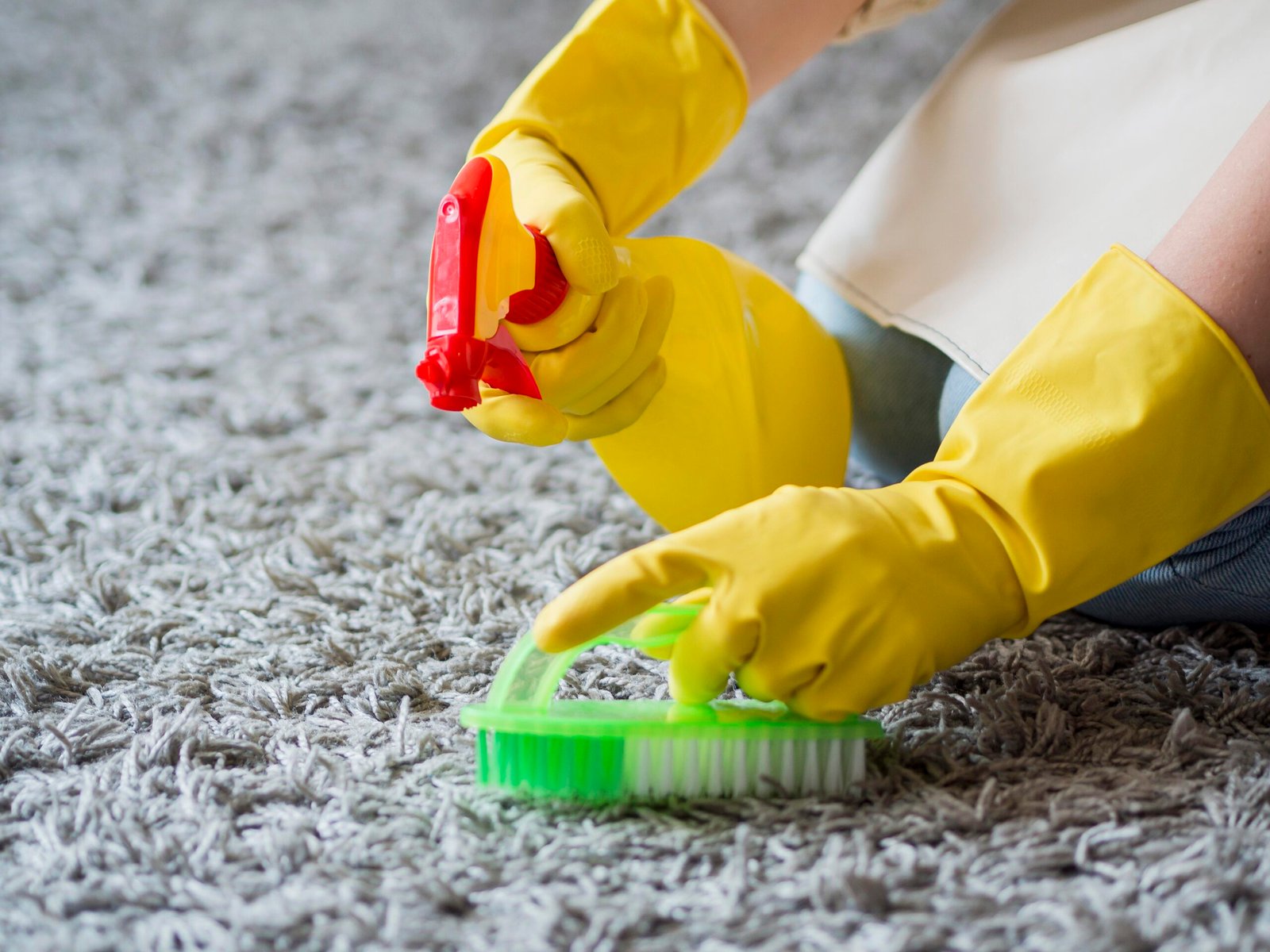
Spotting Guide for Rug Owners
Spills and spots on a rug can happen easily, but treating them incorrectly may turn a removable spot into a permanent stain. The safest option for valuable, delicate, antique, or specialty rugs is professional rug cleaning by a trained rug-care professional.
However, professional cleaning may not always be immediately practical for a small everyday spill. The following spotting guide provides general steps that can help rug owners handle minor spills while reducing the risk of permanent damage.
Many over-the-counter spot cleaners are made as one-size-fits-all products and may not be suitable for every type of rug. Some contain detergents, enzymes, bleaches, or other ingredients that can damage fibers, affect dyes, or cause discoloration. For this reason, multipurpose carpet and rug spotters should be used with caution.
The longer a spill remains on a rug, the greater the possibility that it may become a stain. Whenever possible, begin treating a fresh spill as soon as it occurs.
Basic Steps for Treating a Rug Spill
1. Blot the Spill Immediately
Remove as much of the spilled material as possible as quickly as you can. Use a clean, white, absorbent towel and gently press the area.
Work from the outside of the spill toward the center.
Do not rub, scrub, or brush the spot. Rough treatment can damage rug fibers and may spread the stain.
2. Remove Solid Materials
If the spill contains solid material, carefully remove it using a plastic spoon, dull edge, or similar non-sharp object.
Avoid scraping aggressively, as this can damage the fibers.
3. Test the Cleaning Solution First
Before applying any homemade or commercial cleaning solution to the visible stain, test it on an inconspicuous area of the rug.
A hidden area, such as the back of the rug, may be suitable for testing when accessible.
If dye transfers to the towel or the rug changes color, do not use that solution.
Using an unsuitable cleaning solution can set a stain or cause discoloration that may not become obvious until the rug is professionally cleaned and thoroughly rinsed.
4. Avoid Over-Wetting
Use small amounts of liquid when treating a spot.
Applying too much water or cleaning solution can cause the stain to spread and may create additional moisture-related problems.
5. Remember: Less Is More
Cleaning solutions should be used sparingly. Using large quantities or strong chemicals does not necessarily produce better results.
Excessive chemicals can damage rug fibers, affect dyes, and make the original problem more difficult to correct.
6. Be Patient
Some spots respond slowly to treatment. Avoid repeatedly scrubbing or applying stronger chemicals simply because the stain does not disappear immediately.
Gentle treatment is generally preferable to aggressive cleaning that could leave permanent damage.
7. Remove Cleaning Residue
If you use a cleaning solution, blot the solution from the rug and follow up with a damp cloth as appropriate.
Cleaning residue left behind can attract soil and may cause the treated area to become dirty again more quickly.
8. Dry the Area Thoroughly
Moisture should not be left in the rug for an extended period.
Check the treated area after several hours. If it remains damp, use a fan to help circulate air and encourage drying.
If the rug or treated area has not dried within two days, consult a professional rug cleaner.
9. Know When to Call a Professional
If the spot does not improve after careful treatment, stop applying additional products and seek professional advice.
Professional rug cleaners have the equipment and experience needed to evaluate different fibers, dyes, construction methods, and stain conditions.
How to Apply a Cleaning Solution
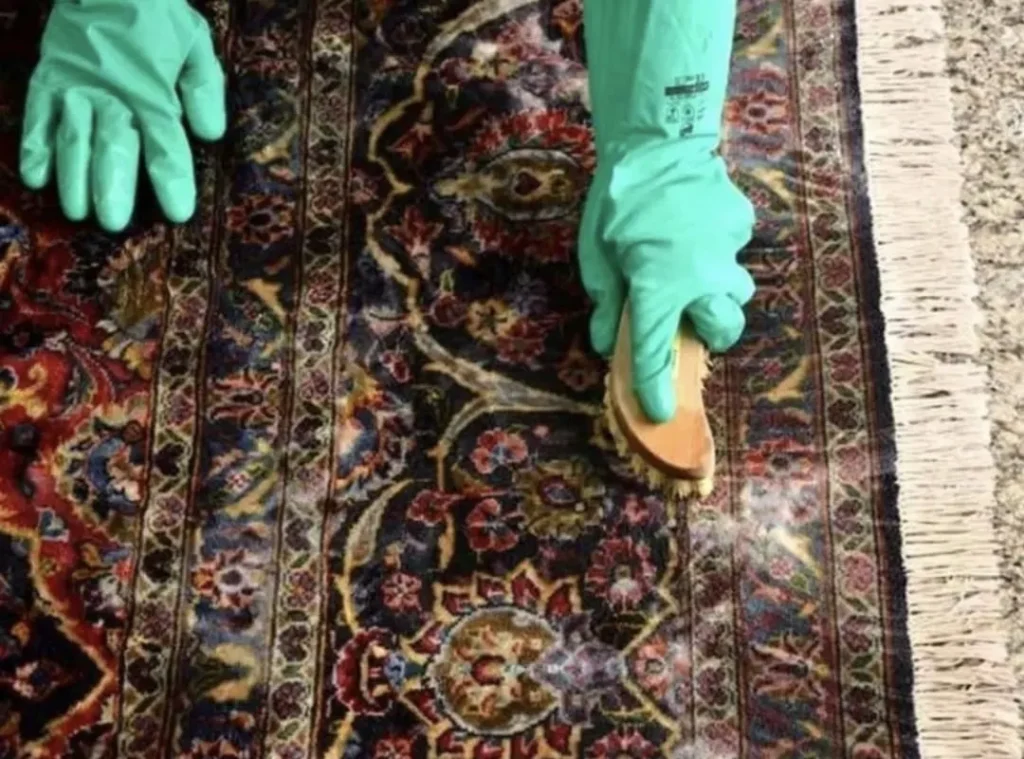
When using a recommended cleaning solution, apply only a small amount with a clean, white, absorbent towel.
Avoid dyed towels because their color may transfer to the rug.
Blot frequently and continue carefully until no more of the spilled material transfers to the towel.
After treatment, remove remaining moisture by pressing or padding the area with an absorbent towel. Allow the area to dry completely.
Spotting Solutions
The following solutions are referenced in the stain-removal index.
1. Cold Water
Apply a small amount of cold water to the affected area and blot with a dry towel.
2. Mild Dishwashing Detergent Solution
Mix 1/2 teaspoon of hand dishwashing detergent that does not contain bleach or disinfectants with one cup of cold water.
Do not use laundry detergent, automatic dishwasher detergent, or general over-the-counter carpet spotting products.
3. White Vinegar Solution
Mix 1/3 cup of white distilled vinegar with 2/3 cup of cold water.
Use the solution carefully and in small amounts.
4. Clear Rubbing Alcohol
Apply a small amount of clear rubbing alcohol only when appropriate.
Use very small quantities to reduce the risk of damage. Rubbing alcohol is not advisable for latex-backed or tufted rugs.
Proper ventilation is important when using volatile solvents such as rubbing alcohol.
5. Consult a Professional Rug Cleaner
If the recommended steps do not improve the stain, or if you are unsure about the correct treatment, consult a professional rug cleaner.
Never use bleach or bleach-containing products on your rug. Bleach can damage rug fibers and cause discoloration.
Stain Removal Index
The numbers below correspond to the spotting solutions listed above.
| Material / Stain | Recommended Steps |
| Beer | 1, 2, 3, 6 |
| Blood | 1, 2, 3, 5 |
| Butter | 1, 2, 5 |
| Candle Wax | 4, 5 |
| Chewing Gum | 4, 2, 5 |
| Chocolate | 2, 3, 5 |
| Cocktails | 1, 2, 3, 5 |
| Coffee / Tea | 1, 2, 3, 5 |
| Cosmetics | 54, 2, 5 |
| Crayons | 4, 2, 5 |
| Egg | 1, 2, 5 |
| Food Coloring | 5 |
| Fruit Juices | 1, 2, 3, 5 |
| Furniture Polish | 2, 4, 3, 5 |
| Furniture Stain | 4, 5 |
| Glue (Elmer’s) | 2, 4, 5 |
| Glue (Carpenter’s) | 2, 4, 5 |
| Glue (Contact Cement) | 4, 5 |
| Grease | 2, 4, 3, 5 |
| Ice Cream | 1, 2, 3, 5 |
| Ink | 4, 2, 5 |
| Ketchup | 1, 2, 3, 5 |
| Milk | 1, 2, 3, 5 |
| Mustard | 2, 3, 5 |
| Nail Polish | 4, 5 |
| Oils | 2, 3, 4, 5 |
| Ointments | 2, 3, 4, 5 |
| Paint (Latex) | 1, 4, 5 |
| Soft Drinks | 1, 2, 3, 5 |
| Tar / Asphalt | 4, 5 |
| Urine | 1, 2, 3, 5 |
| Vomit | 1, 2, 3, 5 |
| Wine | 1, 2, 3, 5 |
Note: The original stain index provided for publication contains a few unclear numbering entries, including “Cosmetics 54, 2, 5.” These should be verified against the client’s original reference before final publication.
Important Reminder for Rug Owners
Different rugs can react differently to water, detergents, solvents, and other cleaning products. Factors such as fiber type, dye stability, rug construction, backing, age, and previous treatments can affect the cleaning process.
For valuable, antique, handmade, silk, wool, or otherwise delicate rugs, professional evaluation may be the safest approach.
When a stain does not respond to careful spot treatment, avoid repeatedly applying additional chemicals. Contact a qualified rug-care professional for guidance.
Disclaimer
These procedures are provided as general best practices and may not be applicable to every rug, stain, or situation. The end user is solely responsible for determining whether a particular procedure or cleaning solution is suitable for their rug and for any consequences resulting from its use.
The authors, ARCS, and ARCS member firms cannot be held responsible for the application of these procedures or for any errors or omissions.
