
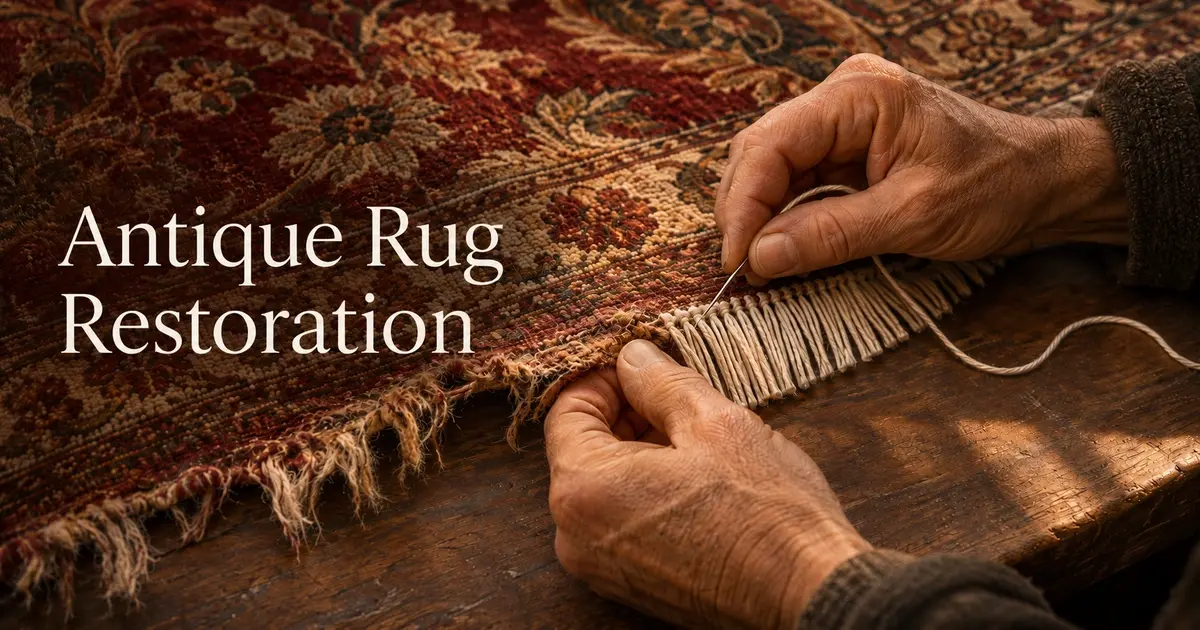
An antique rug is more than a decorative addition to your home. It represents traditional craftsmanship, intricate designs, natural materials, and sometimes generations of family history. Whether you own an antique Persian rug, a handmade Oriental rug, or a valuable heirloom passed down through your family, preserving its original beauty requires specialized attention.
Over time, even well-maintained antique rugs can develop problems such as fading, weakened fibers, unraveling edges, damaged fringe, moth activity, and worn sections. These issues may affect the rug’s appearance and structural condition if left untreated.
This is where professional antique rug restoration becomes important. Rather than simply improving the rug’s appearance, proper restoration focuses on preserving its original construction, stabilizing damaged areas, and extending its usable life.
In this guide, we explain how antique rug restoration works, which warning signs to look for, and why professional care can make a difference when preserving valuable rugs.
Why Do Antique Rugs Need Specialized Restoration?
Antique rugs are often made using natural fibers such as wool, silk, and cotton. Many feature traditional hand-knotting techniques, natural dyes, and detailed patterns that require careful handling.
Unlike newer machine-made rugs, older handmade rugs may have weakened foundations, fragile fibers, and dyes that are sensitive to moisture or cleaning products.
Several factors can contribute to their deterioration:
- Natural aging: Fibers gradually weaken after years of use, exposure, and environmental changes.
- Foot traffic: Repeated pressure can wear down the pile and expose the underlying foundation.
- Sunlight exposure: Prolonged direct sunlight can cause uneven fading and affect the original colors.
- Moisture damage: Water exposure can weaken fibers and create conditions for mold and mildew.
- Moth activity: Moth larvae can feed on natural fibers, creating bald patches and structural damage.
- Improper cleaning: Harsh chemicals, excessive moisture, and unsuitable cleaning techniques can damage delicate materials.
Because these problems affect different parts of a rug, restoration should begin with an understanding of its material, construction, age, and condition.
7 Signs Your Antique Rug May Need Restoration
Recognizing early warning signs can help prevent minor damage from becoming more extensive.
1. Frayed or Missing Fringe
Fringe is an important structural component of many handmade rugs because it often consists of the exposed warp threads that form the rug’s foundation.
When fringe starts unraveling, breaking, or disappearing, the underlying structure may become vulnerable.
Professional fringe restoration can help secure weakened areas and replace missing sections using suitable materials and techniques.
2. Unraveling Edges and Side Binding
The edges of an antique rug help hold its woven structure together. When the side binding becomes loose or damaged, the rug may begin to fray, curl, or lose fibers.
Ignoring this problem can allow damage to spread toward the main body of the rug.
Edge binding and selvage repair help stabilize these vulnerable sections.
3. Bald Patches and Missing Pile
Bald patches can develop because of moth activity, excessive wear, friction, or prolonged damage.
When the pile disappears, the foundation underneath may become exposed.
Depending on the rug’s construction, professional specialists may recommend hand reweaving or another appropriate repair technique to rebuild the damaged area.
4. Holes, Tears, or Cuts
Accidental cuts, pet damage, burns, and natural deterioration can create holes in antique rugs.
Even a relatively small opening can become larger when the surrounding foundation is weak.
Professional restoration may involve rebuilding the damaged foundation and carefully recreating the missing pile while matching the original pattern.
5. Fading and Uneven Colors
Antique rugs can gradually lose their original color intensity due to sunlight, environmental exposure, and aging.
However, faded colors do not automatically mean that a rug needs dye restoration.
An experienced specialist should first evaluate the original dyes and determine whether cleaning, stabilization, or another conservation approach is more appropriate.
6. Moth Damage
Moths can cause significant damage to wool and other natural-fiber rugs.
Look for irregular bald patches, thinning pile, loose fibers, and signs of insect activity, particularly on the underside of the rug.
Active moth problems should be addressed before repairing the affected areas. Otherwise, newly restored sections may become damaged again.
7. Weak or Deteriorating Foundation
The foundation is the structural base that supports the rug’s pile and overall construction.
When warp or weft threads weaken or break, the rug may lose its stability.
Foundation damage often requires specialist attention because repairing the visible pile alone will not resolve the underlying structural problem.
Antique Rug Conservation vs. Restoration: What’s the Difference?
These terms are sometimes used interchangeably, but they describe different approaches to caring for older rugs.
Antique rug conservation focuses on preserving the existing material and preventing further deterioration. It generally involves minimal intervention, especially when the rug has historical or artistic significance.
Examples include:
- Stabilizing weak areas.
- Securing loose edges.
- Protecting fragile fibers.
- Preventing further unraveling.
- Addressing environmental factors that contribute to deterioration.
Antique rug restoration, on the other hand, involves repairing damaged sections to improve the rug’s structural condition and appearance.
Depending on the rug, restoration may include:
- Hand reweaving damaged sections.
- Repairing holes and tears.
- Replacing missing fringe.
- Restoring damaged edges.
- Rebuilding weakened foundations.
- Matching yarn and patterns to surrounding areas.
The appropriate approach depends on the rug’s condition, construction, intended use, and preservation requirements.
For valuable antique pieces, preserving original material should always be an important consideration.
How Does Professional Antique Rug Restoration Work?
Restoring an antique rug requires more than repairing visible damage. Each stage should be selected according to the rug’s specific requirements.
Here are some of the important steps involved.
Step 1: Detailed Rug Inspection
The restoration process begins with an assessment of the rug’s fiber type, weaving technique, foundation, dye condition, and existing damage.
Specialists examine both sides of the rug to identify problems that may not be visible from the surface.
This assessment helps determine which restoration techniques are appropriate.
Step 2: Identifying the Original Materials
Before beginning repairs, the specialist needs to understand the rug’s construction.
This may include identifying:
- Wool, silk, or cotton fibers.
- Original knotting techniques.
- Warp and weft construction.
- Pile direction and density.
- Pattern details and color variations.
Understanding these elements helps ensure that repair materials and techniques are compatible with the original rug.
Step 3: Cleaning and Damage Preparation
Some antique rugs require professional cleaning to remove accumulated dirt and contaminants before restoration.
However, cleaning methods must be selected carefully because delicate fibers and older dyes may react differently to moisture and cleaning solutions.
Cleaning should not be confused with structural restoration. A rug may become cleaner without its holes, damaged edges, or weakened foundation being repaired.
Step 4: Repairing Damaged Sections
Once the appropriate approach has been established, restoration work can begin.
Depending on the damage, this may involve:
- Hand reweaving missing pile.
- Repairing holes and tears.
- Securing loose edges.
- Restoring damaged fringe.
- Reinforcing weakened foundation threads.
- Reconstructing missing pattern sections.
The objective is to make repairs compatible with the rug’s original construction while retaining as much original material as possible.
Step 5: Final Quality Inspection
After the restoration work is completed, the rug should be inspected for repair stability, structural consistency, and overall appearance.
The repaired areas should integrate as naturally as possible with the surrounding material.
A careful final assessment helps identify any remaining concerns before the rug is returned to its owner.
Why You Should Avoid DIY Antique Rug Restoration
It can be tempting to repair a damaged antique rug at home, especially when the problem appears minor.
However, incorrect repair methods can make existing damage worse.
Here are some common mistakes to avoid:
Using household adhesives: Glue and adhesive products can leave permanent residue, stiffen fibers, and interfere with future restoration.
Cutting damaged fringe: Fringe may be connected to the rug’s foundation. Cutting it without understanding the construction can cause further unraveling.
Using harsh cleaning chemicals: Strong cleaning products may affect natural fibers and cause color bleeding.
Scrubbing damaged sections: Excessive friction can weaken fragile pile and loosen surrounding fibers.
Attempting DIY reweaving: Rebuilding a hand-knotted pattern requires appropriate materials, knotting techniques, and an understanding of the original construction.
If your rug has significant damage, professional evaluation is generally a safer starting point than experimenting with household repair methods.
Is Antique Rug Restoration Worth the Investment?
In many situations, restoring an antique rug can be a worthwhile alternative to replacing it.
However, the decision depends on several factors.
Rug craftsmanship: Handmade rugs often involve specialized weaving techniques that cannot easily be replicated by modern alternatives.
Extent of damage: Localized fringe damage or a small hole may be easier to repair than widespread foundation deterioration.
Material and construction: Silk, wool, and other natural-fiber rugs may require different restoration techniques and levels of expertise.
Sentimental significance: A family heirloom may have personal value that goes beyond its resale price.
Restoration requirements: The cost depends on the size of the rug, type of damage, materials required, and complexity of the repair.
Before making a decision, request a professional assessment and estimate. This helps you understand what can realistically be restored and whether the proposed work makes sense for your rug.
How to Maintain Your Antique Rug After Restoration
Once your antique rug has been restored, proper maintenance can help protect the repaired areas and preserve its condition.
Consider these simple precautions:
- Vacuum gently using a suitable setting for the rug’s construction.
- Avoid excessive moisture and household cleaning chemicals.
- Keep the rug away from prolonged direct sunlight.
- Address spills promptly without aggressive scrubbing.
- Rotate the rug periodically to distribute normal foot traffic.
- Check the underside occasionally for signs of moth activity or deterioration.
- Schedule professional inspections and cleaning when appropriate.
For particularly delicate or valuable rugs, ask the restoration specialist for care recommendations based on the material and condition.
Preserve Your Antique Rug with Professional Restoration from Essy Rugs
An antique rug deserves care that respects its age, materials, and original craftsmanship. Whether it has damaged fringe, unraveling edges, missing pile, moth damage, or weakened foundation threads, the right restoration approach can help preserve its structure and extend its useful life.
At Essy Rugs, we provide specialized rug repair and restoration services for Persian, Oriental, handmade, wool, silk, and antique rugs.
Our restoration work includes fringe repair, edge binding, hand reweaving, hole and tear repair, and foundation restoration. Each rug is assessed individually so the recommended repair method is appropriate for its construction and condition.
Serving Montgomery, Alabama, and surrounding Central Alabama communities, we help rug owners care for valuable pieces with attention to detail and craftsmanship.
Request a Free Rug Restoration Quote Today!
Frequently Asked Questions About Antique Rug Restoration
1. Can antique rugs be restored?
Yes. Many antique rugs can be restored depending on their fiber condition, foundation strength, and extent of damage. Professional restoration may involve reweaving, fringe replacement, edge repair, and structural reinforcement.
2. How much does antique rug restoration cost?
The cost depends on the rug’s size, material, age, type of damage, and complexity of the required repairs. A professional assessment is the best way to receive an accurate estimate.
3. Can faded antique rugs have their original colors restored?
Not always. Fading caused by age and sunlight may be permanent. A specialist can evaluate the dyes and recommend appropriate conservation or restoration options without unnecessarily altering the original appearance.
4. Is it possible to repair holes in antique Persian rugs?
Yes. Depending on the damage and construction, holes can sometimes be repaired through hand reweaving, foundation reconstruction, or suitable patching techniques.
5. How long does antique rug restoration take?
The timeline depends on the extent of damage, rug construction, materials required, and complexity of the work. Minor repairs generally take less time than extensive reweaving or foundation restoration. Ask for an estimated turnaround after the initial assessment.
6. Can moth-damaged antique rugs be restored?
Many moth-damaged rugs can be repaired. However, active infestations should be treated first to prevent further damage. After sanitation, damaged sections may be repaired through appropriate reweaving techniques.
7. Should antique rugs be professionally cleaned before restoration?
It depends on the rug’s condition and the type of restoration required. Some rugs benefit from cleaning before repair, while fragile or structurally unstable pieces may need stabilization first. A professional inspection should determine the correct sequence.
